
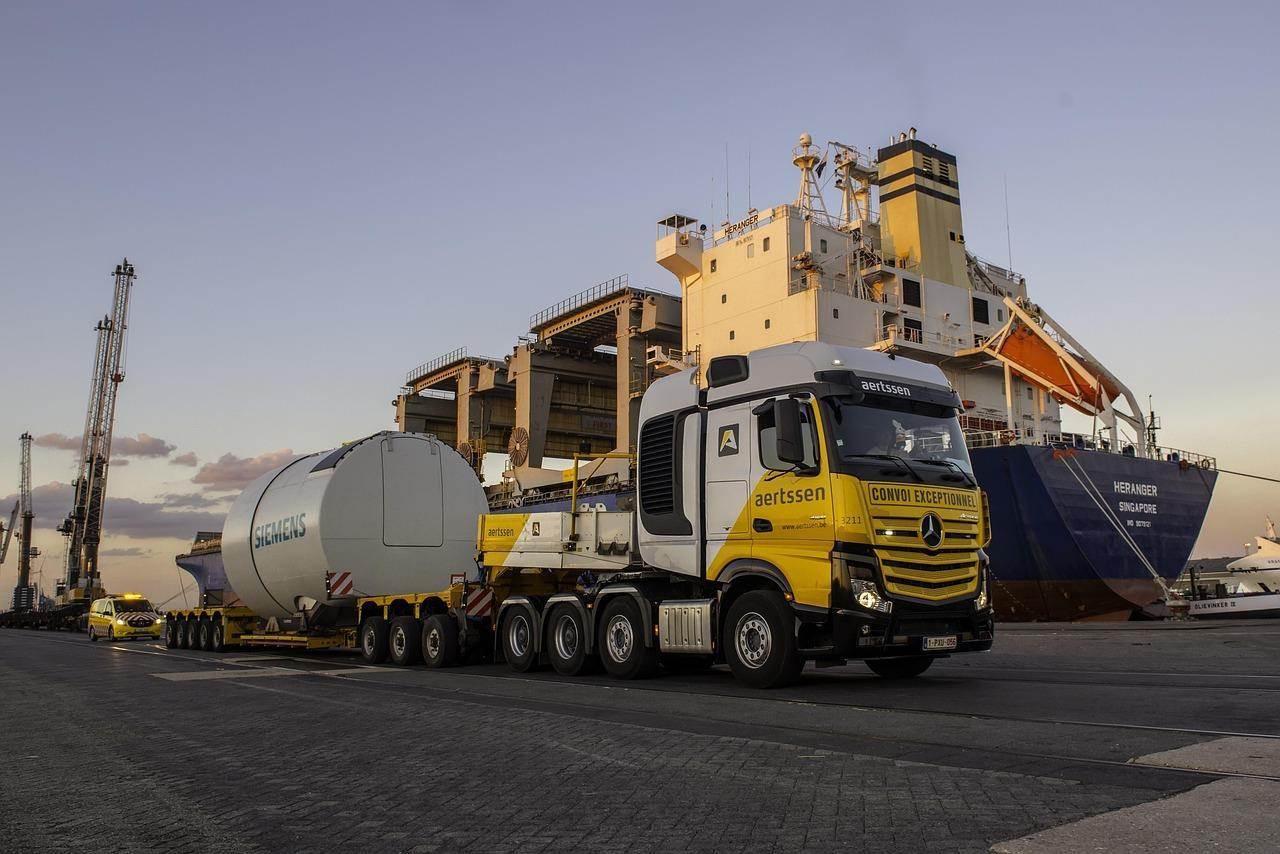
Transporting a boat, large machine or unusually shaped object requires a very different approach from moving ordinary freight. Companies working in this field, such as van de wetering, operate in a part of the transport industry where preparation, specialised equipment and practical route knowledge play a major role. Every load has its own dimensions, weight distribution and handling requirements, which means that standard solutions are not always sufficient.
Why exceptional transport requires more preparation
Most standard freight can be loaded onto a conventional trailer and transported along commonly used routes. Oversized cargo is less predictable. A load may be too high for a bridge, too wide for a narrow road or too long to negotiate a particular roundabout.
The preparation therefore begins with detailed measurements. Transport planners need accurate information about the object itself, but also about the vehicle and trailer combination that will carry it. Even relatively small differences in height or width can influence which route is available.
Road conditions also change. Temporary roadworks, construction projects and traffic measures can turn a previously suitable route into an impractical one. For larger transports, route planning is therefore not simply a matter of choosing the shortest distance.
A successful exceptional transport often depends more on preparation than on the number of kilometres travelled.
Different loads create different challenges
There is no single definition of a typical exceptional load. The category includes a wide variety of objects from different industries.
Examples include:
- boats and yachts
- industrial machinery
- large storage tanks and silos
- cable reels
- construction components
- wind-energy equipment
- large transport crates
- offshore components
Each object behaves differently during transport. A heavy machine may have most of its weight concentrated in a small area, while a long component can create difficulties when turning. Boats introduce another challenge because their curved hulls often require specially positioned supports.
These differences make experience important. Transport teams need to understand not only road transport, but also how different types of cargo should be supported and secured.
Equipment has to match the cargo
Standard trailers are designed for standard freight dimensions. Specialist transport often requires equipment that offers more flexibility.
Low-loaders can reduce the overall transport height, while extendable trailers make it possible to carry particularly long objects. Adjustable support systems can help position irregularly shaped cargo securely. In some situations, specialised equipment can make several centimetres of difference, which may determine whether the load can pass underneath infrastructure along the route.
The trailer is only part of the setup. Protective materials, securing systems and support structures also need to suit the object being transported. Incorrect pressure on a sensitive surface can cause damage even when the load itself remains firmly secured.
Route knowledge goes beyond navigation
Digital navigation has made ordinary road transport easier, but exceptional transport requires much more information than a standard map can provide.
Transport planners may need to assess bridge heights, road widths, weight restrictions, sharp turns and obstacles near the road. Trees, signs, traffic lights and temporary barriers can all influence the available space.
For especially difficult routes, a physical inspection may be carried out before the transport takes place. This allows planners to verify whether the theoretical route actually works in practice.
International journeys add another layer of complexity. Infrastructure standards and transport regulations can differ from one country to another. A route that is perfectly suitable on one side of a border may require additional planning after crossing into another region.
The role of permits and traffic guidance
Oversized loads often fall outside normal legal dimensions. Depending on the route and type of cargo, permits may therefore be necessary before the vehicle is allowed to travel.
Authorities can impose specific conditions. A transport may need to operate during particular periods, avoid certain roads or require additional traffic guidance. In some cases, extra traffic management is necessary when the transport passes narrow sections or busy intersections.
Support teams can also play an important practical role. They can warn other road users, help the driver negotiate difficult situations and communicate information about upcoming obstacles.
This makes exceptional transport a coordinated operation rather than an isolated journey by a single driver.
Experienced drivers remain important
Even with advanced equipment and detailed route planning, the driver has a central role.
A large transport combination behaves differently from a regular truck. It may accelerate more slowly, require greater braking distance and need considerably more space when turning. The driver needs to anticipate these differences continuously.
Communication is equally important. Drivers may work alongside transport planners, support teams, crane operators, technical specialists and employees at loading or unloading locations.
Experience is particularly valuable when unexpected circumstances appear. Traffic conditions can change rapidly, while access to an industrial site or marina may be tighter than expected. A driver familiar with unusual loads is better equipped to assess these situations safely.
Loading and unloading deserve equal attention
The journey itself receives most of the attention, but many transport risks occur before departure or after arrival.
Heavy and irregular objects need to be positioned correctly on the trailer. The weight must be distributed safely, while contact points should provide sufficient support without damaging the cargo.
Loading can involve cranes, lifting equipment or other machinery. Several parties may therefore need to coordinate their activities within a relatively small area.
Unloading presents similar challenges. The destination must be accessible, the receiving equipment must be ready and there needs to be enough space to manoeuvre the transport combination.
For boats, these operations often take place near marinas or shipyards, where available space can be limited. Industrial objects may instead need to be delivered directly to a production facility or construction site.
Why planning remains the foundation of specialist transport
Technology continues to improve transport planning. Digital route data, vehicle tracking and increasingly detailed infrastructure information can help companies prepare complicated journeys.
Still, specialist transport remains heavily dependent on practical knowledge. Measurements need to be correct, equipment needs to fit the load and the chosen route must work in real conditions rather than only on a screen.
That combination of data, equipment and experience is what allows unusually large or complex objects to move safely between locations while limiting disruption to other road users.